

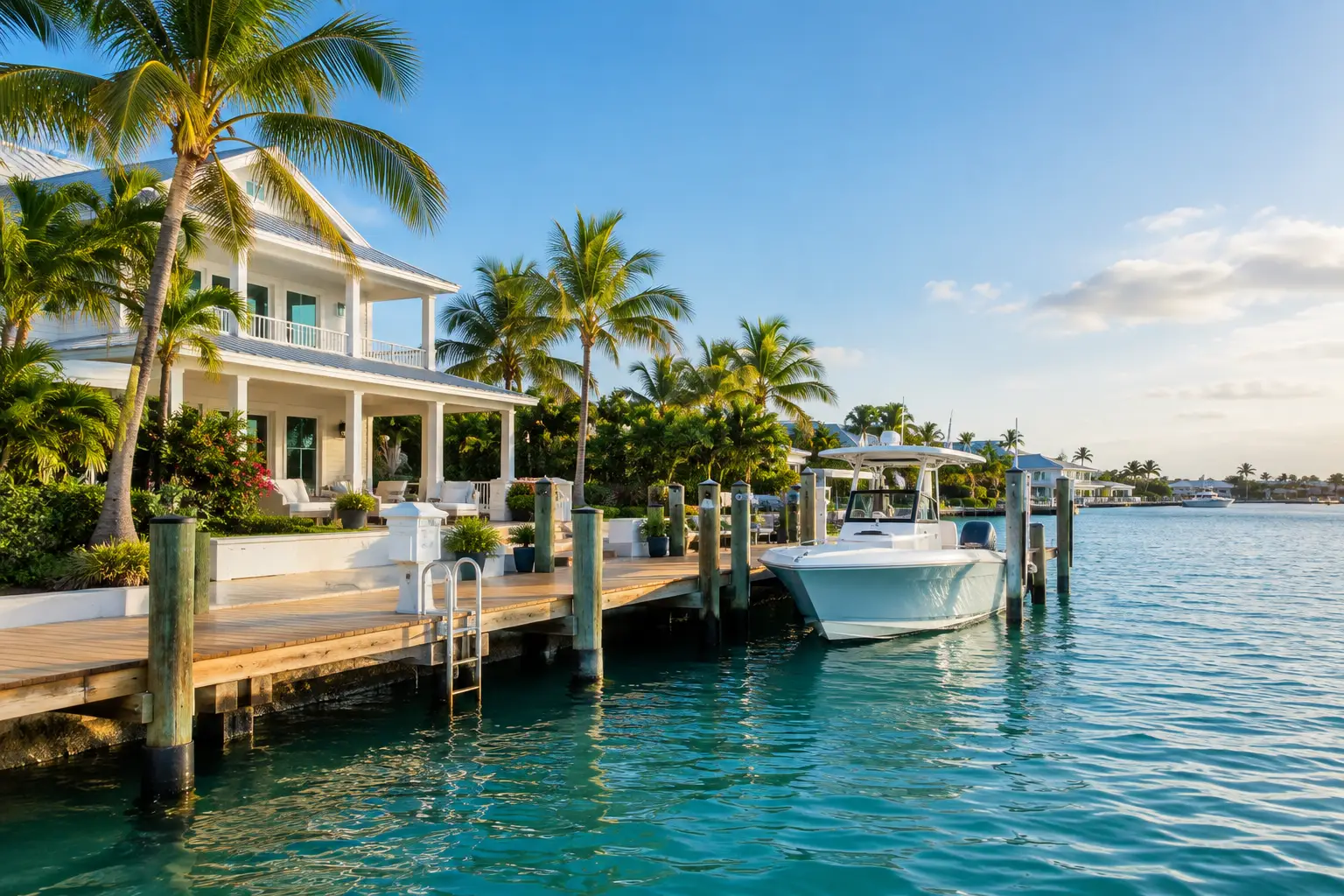
A dock can turn a beautiful island address into the starting point for a morning fishing run, an afternoon at the sandbar, or dinner by boat. But two separate Key West waterfront homes with dock access are not necessarily equal in what they offer. Two properties may look similar from the street while offering very different water depth, dock condition, insurance exposure, and boating practicality.
For buyers drawn to the Keys for both the home and the water, the right purchase begins with a clear look beyond the view. A private dock is a meaningful lifestyle feature and a valuable asset, but its usefulness depends on details that deserve careful review before an offer is made.
What “Waterfront With a Dock” Really Means
A listing description can say waterfront, canal front, open water, or dockage, yet each term needs context. Waterfront may mean broad open-water views but limited ability to keep a boat at the property. Canal-front homes may have protected dockage, although access to deeper water can involve low bridges, narrow canals, shallow spots, or a longer idle-speed ride.
The dock itself also varies widely. Some homes offer a simple day dock suitable for a smaller center-console boat. Others have a substantial concrete seawall, pilings, shore power, a boat lift, and room for a larger vessel. A property may have an existing dock footprint but no current lift, or it may advertise dockage that is shared with a neighboring residence or association.
Before falling in love with the setting, buyers should clarify whether the dock is legally permitted, privately owned, and appropriate for the boat they intend to use. The most photogenic waterfront property is not necessarily the most functional one for your life on the water.
Start With Your Boating Routine
The best waterfront location depends less on a generic definition of luxury and more on where and how you plan to boat. A buyer who wants quick access to offshore fishing grounds may prioritize a direct route to open water and sufficient depth for your boat’s draft at low tide. Someone who prefers sunset cruises, paddleboarding, and occasional restaurant stops may be perfectly happy with protected canal access.
Think through the experience in practical terms. How many minutes will it take to reach open water? Are there fixed bridges between the home and your preferred route? Does the canal remain navigable for your boat at lower tides? Is there enough turning room at the dock? Can guests safely board, and is there space for a tender, kayaks, or paddleboards?
These questions can shape the search area. Key West, Stock Island, and the Lower Florida Keys each offer distinct waterfront patterns. Some locations provide convenience to dining, marinas, and the energy of Key West. Others offer more privacy, larger lots, or different access to the Atlantic, Gulf, backcountry, and reef waters. There is no universal best choice, only the right fit for your priorities.
Water Depth Is Not a Minor Detail
A dock may accommodate a boat today but not the vessel you hope to own later. Depth readings in marketing materials can be helpful, but they should not replace due diligence. Depth can vary by tide, season, canal maintenance, and the precise location of a slip or lift.
A buyer should consider both the depth at the dock and the route out. A deep basin does little good if a shallow approach limits passage. For larger boats, beam, draft, bridge clearance, and channel width all matter. It is wise to review the property with a qualified marine professional or captain familiar with the intended vessel and local waterways.
Evaluate the Seawall, Dock, and Lift
The structures at the water’s edge can represent a major portion of a waterfront home’s value and future maintenance budget. Saltwater, sun, storms, vessel impact, and marine growth are hard on docks, pilings, lifts, electrical connections, and seawalls. A dock that appears sound during a showing may have aging components that require near-term work.
A thorough inspection should address the condition of the seawall or shoreline stabilization, dock decking, pilings, tie rods where applicable, cleats, ladders, electrical service, water lines, lift motors, bunks, and controls. Buyers should also ask about the age of improvements, recent repairs, warranties, and the maintenance history.
Concrete seawalls can offer a finished, usable edge to the property, but repairs or replacement can be significant projects. Wood docks have a classic coastal appeal and may be easier to modify in some circumstances, yet they require ongoing attention. Boat lifts reduce hull exposure and can be a major convenience, but they must be rated for the boat’s actual loaded weight, not just an estimate of its dry weight.
A general home inspection is valuable, but waterfront buyers often benefit from specialists who understand marine construction. That added evaluation can bring clarity to a purchase decision and provide a more realistic view of ownership costs.
Permits and Regulations Protect Your Investment
Waterfront improvements are subject to layered local, state, and federal considerations. In the Florida Keys, permits can influence whether you can repair, replace, expand, or reconfigure a dock, seawall, lift, or shoreline structure. Existing improvements are not automatically guaranteed to be expandable, and older features may not meet current standards for new work.
Request available permits, surveys, and records early in the due-diligence period. Confirm property boundaries, ownership of the submerged land or riparian rights where relevant, and whether there are recorded restrictions affecting dock use. If the home is in a community with an association, review its rules on vessel size, parking trailers, lift installations, rental activity, and exterior improvements.
Buyers considering additions should approach the property as it exists today, not solely as a future project. The ability to make changes can depend on environmental considerations, waterway classification, setbacks, permitting timelines, and agency approval. A personalized real estate consultation can help identify questions to bring to the appropriate inspectors, contractors, and permitting professionals before committing to a plan.
Insurance, Elevation, and Storm Readiness
Waterfront ownership in the Keys calls for thoughtful insurance planning. Windstorm, flood, homeowners, and boat insurance are separate considerations, and costs can vary materially from one property to another. Elevation, construction type, roof age, opening protection, prior claims, flood-zone designation, and proximity to water may all influence coverage and premiums.
Ask for available elevation certificates, flood insurance information, wind mitigation reports, and records of past storm repairs. These documents do not replace quotes from qualified insurance professionals, but they can help buyers understand the property’s risk profile early enough to make an informed decision.
Storm readiness should include the dock as well as the residence. Consider how the boat would be secured or relocated, whether the lift has storm-rated features, where loose dock furniture would go, and how easily the property can be prepared before a named storm. Some owners prefer the convenience of a lift; others value a slip that makes rapid departure more practical. Again, the right answer depends on the boat and the owner’s routine.
Location Still Shapes Everyday Life
A waterfront home is more than a place to keep a boat. Your day-to-day experience may include traffic patterns, grocery access, bikeability, airport convenience, neighborhood activity, privacy, and the character of the views. Open-water homes can offer dramatic sunsets and expansive horizons, while canal homes may deliver calmer conditions, sheltered dockage, and a more intimate residential setting.
Rental goals also require a careful property-specific review. Buyers interested in income potential should verify local rules, licensing requirements, minimum rental periods, association restrictions, and the financial impact of management, insurance, maintenance, and vacancy. A waterfront address alone does not determine rental performance or legal rental flexibility.
For sellers, these distinctions should guide the marketing strategy. A strong waterfront listing does more than state that a home has a dock. It explains the dockage dimensions, water access, lift capacity, route to open water, improvements, and lifestyle advantages with accurate documentation. Those details attract better-informed buyers and help a property stand out in a specialized market.
Choosing a Waterfront Home With Complete Confidence
The strongest purchase decision comes from matching the home, the water access, and the ownership responsibilities to your real life. A buyer who wants a quiet retreat may favor a protected canal and manageable boat size. A serious angler may accept a longer drive or a different neighborhood to gain the water depth and route that makes frequent offshore trips easy.
Golden Sapphire Real Estate can help buyers look beyond the listing photos and evaluate waterfront homes through the lens of lifestyle, long-term use, and investment goals. The right dock is not simply a feature on a property sheet. It is the place where your Keys days begin, and it deserves the same care as every other part of the home you choose.