

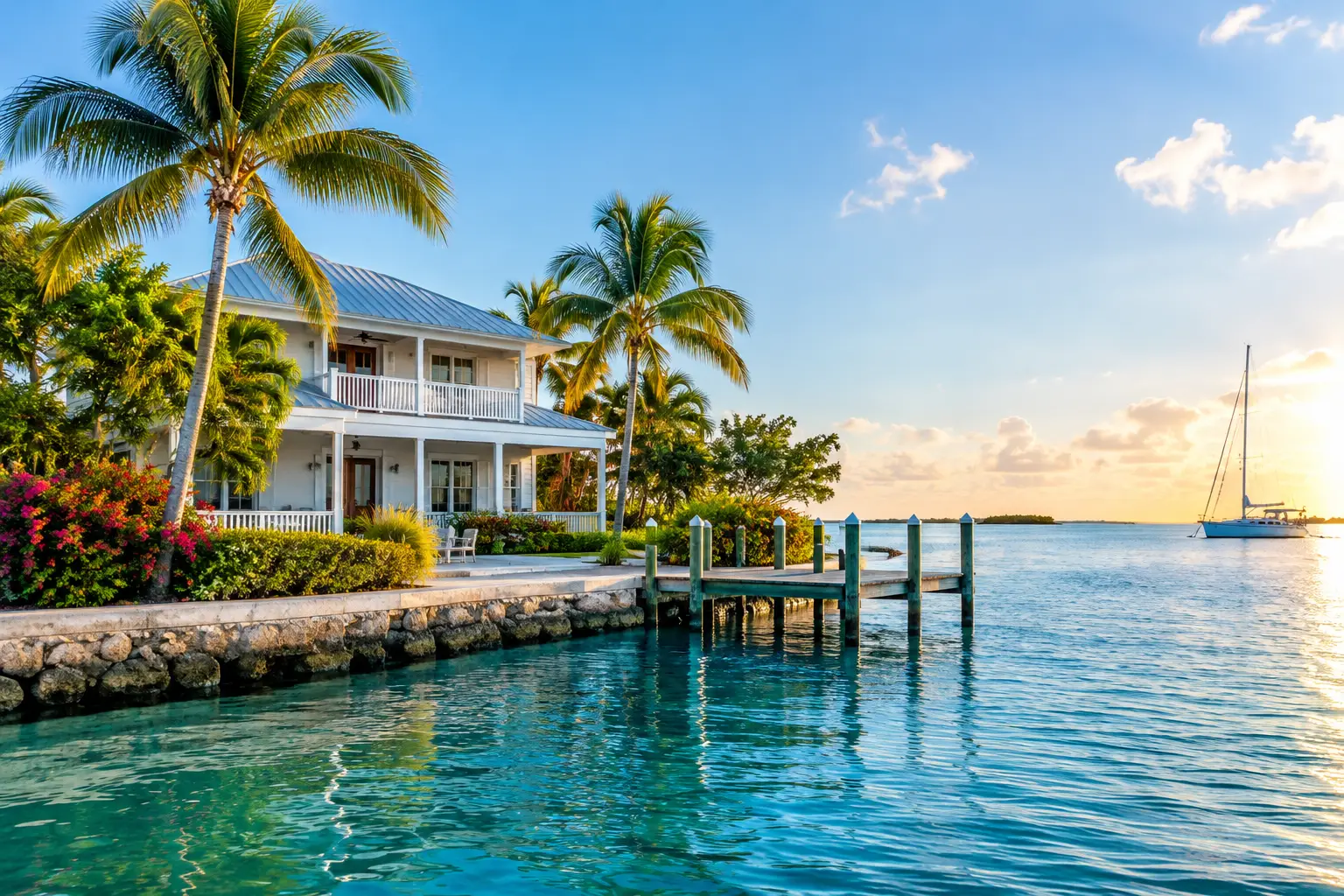
A listing may say “waterfront” because a home sits on a canal, faces open water, overlooks a lagoon, or has a distant water view. In Key West, those differences are far more than marketing language. They shape the daily boating experience, privacy, insurance considerations, maintenance needs, resale appeal, and the price a buyer may be willing to pay.
So, what is waterfront property in Key West? At its simplest, it is residential property with direct adjacency to a body of water. For a buyer, though, the useful definition is more specific: it is a home where the type of water, legal access, shoreline condition, and boating infrastructure support the lifestyle you want to enjoy.
What Is Waterfront Property in Key West?
Key West waterfront property can include homes along saltwater canals, properties on open water, residences near harbors and marinas, and homes with bay, Gulf, Atlantic, or protected water views. Some properties offer a private dock and immediate boat access. Others may face the water without providing a place to keep a boat. Both can be waterfront, but they serve very different priorities.
The distinction matters because island geography is limited and highly varied. A quiet canal may be ideal for a homeowner who wants sheltered dockage and a short ride to open water. An open-water residence may offer wider views, breezes, and dramatic sunsets, while also being more exposed to wind, waves, and weather. A home with a water view but no deeded water access can still be beautiful, but it should not be valued or selected as a boating property.
For many buyers, the question is not simply whether a home touches water. It is whether the property fits the way they plan to live in the Keys.
The Main Types of Key West Waterfront Homes
Canal-front property
Canal-front homes are among the most sought-after choices for boat owners. These residences often have seawalls, docks, boat lifts, or davits, although the condition and permitted status of each feature must be verified. Canal living can provide calmer water at the home and convenient access for paddleboards, kayaks, and boats.
Not all canals offer the same navigation experience. Canal depth, width, bridge clearance, turning space, and the route to open water can affect the type and size of boat that makes sense for the property. A buyer with a center-console boat, a sailboat, or a larger vessel should evaluate these details before assuming a dock will meet their needs.
Open-water property
Open-water homes typically appeal to buyers who value broad water views, changing light, sea breezes, and a stronger connection to the surrounding island environment. Depending on the location and orientation, these properties may look toward the Atlantic, Gulf waters, Florida Bay, or other open channels.
The trade-off is exposure. Open-water shorelines can face more wind, salt spray, waves, and storm conditions than a protected canal. This may influence dock design, seawall upkeep, landscaping, windows, outdoor furnishings, and insurance planning. The view can be extraordinary, but buyers should understand the practical responsibility that comes with it.
Harbor, marina, and basin-front property
Some Key West-area homes face active harbors, marina basins, or protected waterfront settings. These can be attractive for people who enjoy watching boat traffic, being close to marinas, or having convenient access to boating services. The character of the setting matters. A lively harbor location may feel energized and connected, while a residential basin may feel quieter and more private.
A nearby marina does not automatically mean a home includes a slip, and a private slip does not automatically transfer with every sale. The ownership documents, association rules, and marina agreements deserve careful review.
Water-view property
A water-view residence may overlook the ocean, harbor, channel, or canal from a balcony, upper floor, or outdoor living area without having direct waterfront frontage. These homes can deliver much of the visual appeal of island living, often with fewer shoreline maintenance obligations.
For buyers who do not own a boat or prefer lower-maintenance ownership, a view property can be an excellent fit. It is simply different from a home where you can step outside, launch a kayak, or board your boat from a private dock.
Waterfront Is About Access, Not Just Appearance
The most meaningful waterfront question is often: access to what? A home may have water at its edge, but the usable experience depends on several property-specific factors.
A dock should be evaluated for its size, material, condition, tie-downs, electrical service, water service, and permits. A seawall should be examined for visible cracking, settlement, erosion, or signs that repairs may be approaching. If a boat lift is present, buyers should consider its capacity, age, operation, and suitability for their vessel.
Navigation is equally important. A dock on a shallow canal can be perfectly suitable for a smaller boat or paddlecraft but may not work for an owner who expects deep-water access. Bridge heights, tidal conditions, channel routes, and proximity to fuel or open water all affect how convenient boating will feel after closing.
This is where a personalized property review is valuable. Two homes may be similarly priced and both listed as waterfront, yet one could offer a far more practical boating setup for a particular buyer.
Ownership Costs and Responsibilities to Consider
Waterfront ownership has an emotional pull, but the best purchases balance that appeal with clear-eyed planning. Salt air, humidity, sun, and storms are part of the Keys environment. They also place steady demands on exterior materials and waterfront structures.
Buyers should anticipate ongoing attention to docks, seawalls, boat lifts, railings, outdoor lighting, landscaping, roofs, windows, and mechanical systems. Inspection professionals can help identify current conditions, but a buyer should also consider the long-term maintenance rhythm of the home.
Insurance is another major consideration. A property’s elevation, construction, age, roof condition, wind-mitigation features, flood-zone designation, and claims history can all influence coverage options and costs. Waterfront does not automatically mean a property has the same flood or wind exposure as another waterfront home a few blocks away. Obtain insurance guidance early enough for it to inform the purchase decision rather than become a late-stage surprise.
For condominium and townhome buyers, association financial health and insurance arrangements require special attention. Review the association’s rules, reserves, maintenance obligations, rental policies, and any responsibility for docks, seawalls, roofs, or common waterfront areas.
Key West, Stock Island, and the Lower Keys Offer Different Experiences
The phrase “Key West waterfront” is often used broadly, but lifestyle options extend beyond the island itself. Key West offers an unmistakable mix of historic character, dining, arts, walkability, and boating culture. Waterfront homes there can be especially limited, making precise property comparisons important.
Stock Island appeals to many boating-oriented buyers because of its working-waterfront character, marina access, and proximity to Key West. Depending on the neighborhood and property, it may offer a different balance of dockage, space, convenience, and atmosphere.
Across the Lower Florida Keys, buyers may find more privacy, larger lots, quieter surroundings, and a closer connection to fishing, diving, and open-water recreation. The right location depends on how often you want to be in Old Town, whether daily boating is a priority, and how much privacy or land matters to your household.
Questions to Ask Before You Make an Offer
Before moving forward on a waterfront home, ask whether the property has direct water frontage or only a view, and whether the shoreline and dock are included with the residence. Confirm the condition and permitted status of all waterfront improvements. If boating is part of the plan, understand the water depth, bridge clearance, route to open water, and the type of vessel the location can realistically accommodate.
Also ask about flood and wind insurance, recent claims, seawall or dock repairs, and any local or association restrictions. Investors should investigate rental rules separately from waterfront features. A property can be a wonderful second home or boating retreat while still having limitations that affect a vacation-rental strategy.
Choosing Waterfront That Fits Your Life
The best Key West waterfront property is rarely defined by one feature alone. It is the home where the view, access, maintenance profile, location, and budget work together for the way you intend to use it. For one buyer, that means sunset-facing open water. For another, it means a protected canal, a dependable lift, and an easy departure for a day on the water.
A broker-led review can bring clarity to the details that do not fit neatly into a listing description. Golden Sapphire Real Estate helps buyers look beyond the word “waterfront” and evaluate the lifestyle, ownership responsibilities, and long-term value behind it. A thoughtful first conversation can help turn an appealing view into a confident Keys property decision.